DACFIT

How does DAC get onto freight wagons? At first glance, this question may appear somewhat banal. The conversion of the vehicles to the new coupling technology is a complex matter. By the end of the decade, 500,000 freight wagons and another 20,000 locomotives across Europe are to be largely converted without any restrictions on operations. Optimally preparing for this process is the purpose of DACFIT.

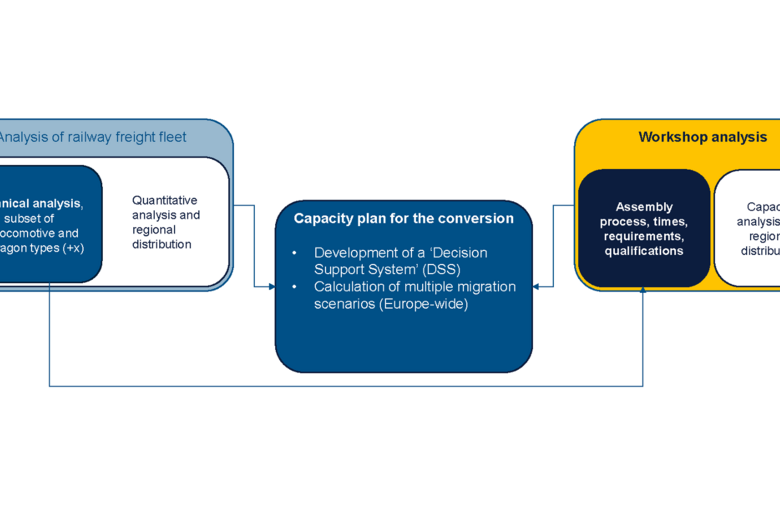
DACFIT is intended to provide a critical component for developing the European ‘DAC Migration Roadmap’ within the ‘European DAC Delivery Program’ (EDDP). The task: comprehensive analysis of the existing freight wagon fleet and workshops, the conversion processes, times and requirements as well as the available and potential conversion capacities. The goal is to enable a valid, Europe-wide evaluation of the challenges of the DAC migration in terms of timing and geographic distribution. The technical insights from the FP5 TRANS4M-R serve as the relevant basis.


In June 2024, seven partners joined to create the DACFIT consortium: DB AG (consortium leader), VPI service company VERS, Czech research institute VÚKV, K+V Ingenieurgesellschaft, the Hungarian BME ITS at the Budapest University of Technology, the Polish Instytut Kolejnictwa and Fraunhofer IML. Together, they are working on eight work packages over a two-year period
Dacfit-en-bild

Focus on workshop capacities by VERS

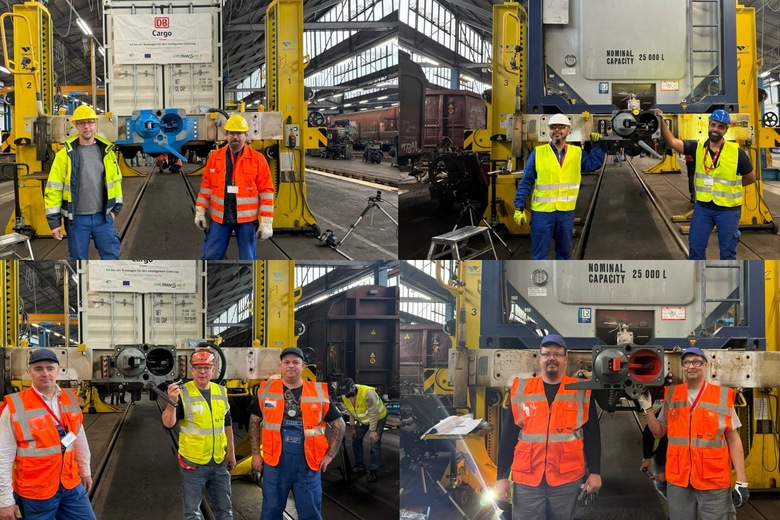
The analysis of the European workshop landscape lies in the hands of VPI European Rail Service GmbH (VERS). With a pan-European network of 300 technically assessed workshops, our service company has the necessary knowledge and experience in how the workshops must be prepared for converting the fleet to DAC. Within the DACFIT framework, VERS is developing a ‘Retrofit Capacity Plan’. The DAC Migration Roadmap calls for a solid base of data and a comprehensive understanding of the qualitative and quantitative requirements on the European workshop landscape. In conjunction with workshop managers and the necessary industry expertise, VERS will produce a precise overview of the workshop processes and capacities for both mechanical and electrical upgrades. This should result in an optimisation of the upgrade process as well as efficient use of the available capacities.

Einbautest ma abschluss

Data bank on the freight wagon fleet

In the other work packages, the consortium partners are working to build a database of the European railway freight fleet. Important information on quantities, types, distribution, technical condition and upgradability is currently subject to uncertainties. Implementing optimised data collection and promoting cooperation between the participants should produce a database that provides a clear and detailed picture of the European freight wagon landscape. This initiative will not only simplify the process of effective decision-making, it will also ensure that the technical documentation required for analysing the upgradability of wagons will be available to all participants.

Feasible capacity plan

The third topic of DACFIT is focused on the planning approach, with the aim of developing a dynamic simulation model for an indicative upgrade plan. The variability in the transportation flows and the various utilisation patterns of the vehicles in different regions must be taken into account here. This simulation will not only support the strategic planning but also identify the required capacities for the upgrade, thereby closing a gap in the existing strategy development.